
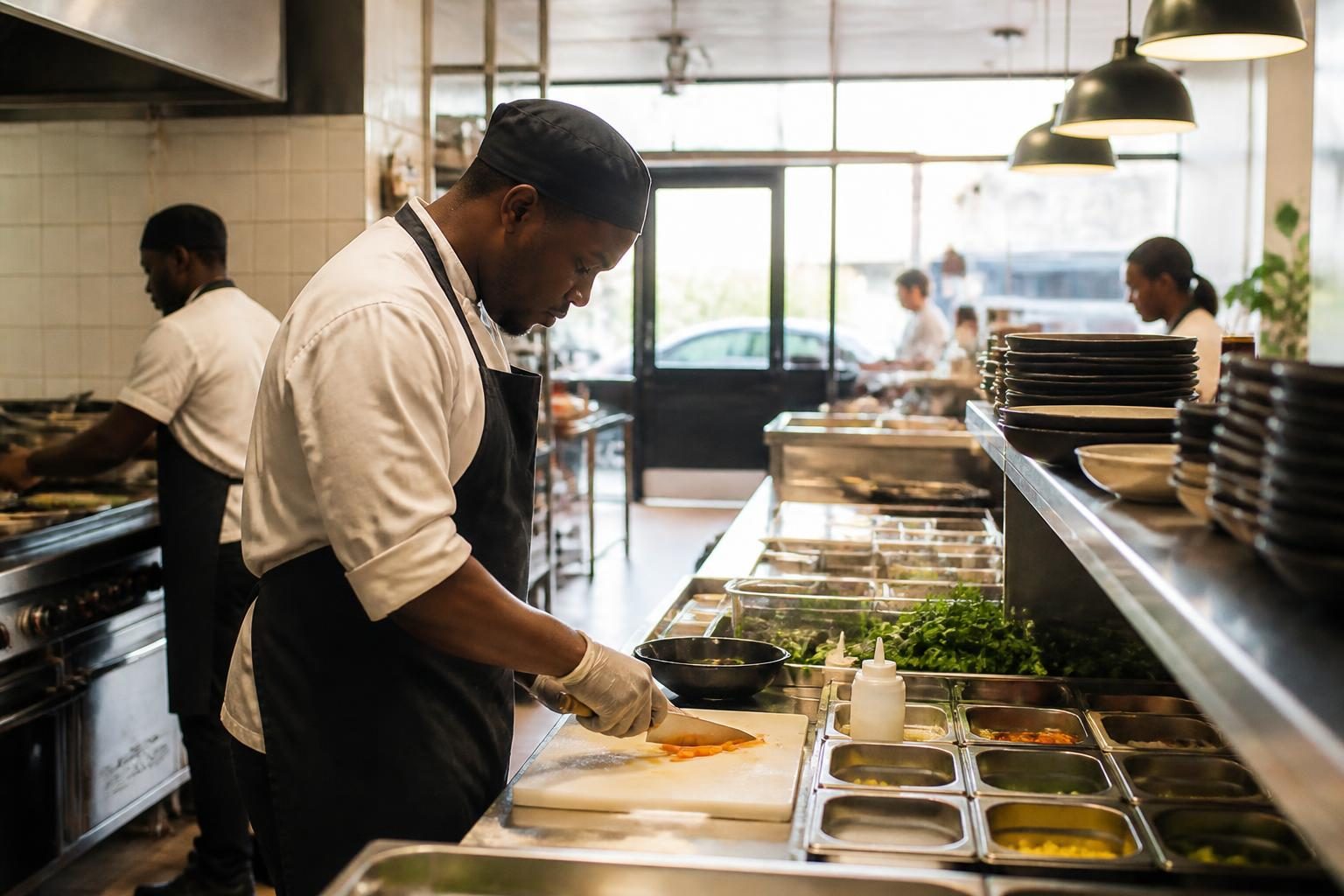
Why speed matters in South African food businesses
Whether you run a quick-service outlet in a Johannesburg CBD strip, a beachfront café in Cape Town, or a canteen serving large groups during Springbok match days, shorter ticket times mean happier customers and higher turnover. But speed can’t come at the cost of quality — South African diners expect fresh, well-presented meals. Below are 10 practical prep and station design hacks you can implement this week to reduce ticket times while maintaining consistency.
10 quick-to-implement hacks
1. Design stations by menu flow, not habit
Arrange stations to match how dishes are assembled. For example, a Cape Malay curry line should flow from rice/roti hold → protein finish → garnish/condiments → plating. Group the tools and ingredients for each sequence so cooks don’t criss-cross the kitchen.
2. Pre-portion proteins and garnishes
Pre-portioning items like sosaties, boerewors links, or burger patties into labelled trays saves time at peak service. Use calorie- and weight-based portioning to keep cost and quality consistent. Label trays with date and cook-by time to manage food safety in warmer climates.
3. Mise en place zones for high-turn items
Create dedicated mise en place trays for high-turn dishes (breakfast plates, lunch sandwiches). Keep them at eye level in refrigerated prep tables so line cooks can grab exactly what they need.
4. Install modular worktops and mobile prep islands
Mobile islands can be repositioned for events, markets, or large lunch rushes. Stainless steel islands with built-in GN pans allow you to move a complete station quickly and maintain hygiene standards.
5. Use visual plating guides
Place laminated plate templates or photos at each station. Visual guides cut plating time and ensure consistent presentation — essential for franchise kitchens or multiple-shift operations.
6. Batch cook smartly
Batch-cook stable components like stews, sauces, and rice in predictable volumes. For South African operations with event-driven spikes (match days, holidays), prepare extra base components and reheat safely using blast chillers or bain-maries.
7. Simplify the pass with a dedicated expediter
A trained expediter keeps orders moving and inspects plates before they leave. In smaller kitchens this role can be combined with the head chef during peak hours; in larger venues, a dedicated expediter reduces mistakes and re-makes.
8. Integrate POS and kitchen display systems
Use POS modifiers and kitchen displays to reduce handwritten notes. In many South African cities, affordable cloud POS systems sync orders to kitchen screens and print priority tickets for specials and allergen flags.
9. Cross-train staff and rotate tasks
Cross-training ensures lines never stall if someone calls in sick. Rotate staff between fry, grill, and plating stations so they understand the whole menu and troubleshoot during busy spells.
10. Use portion-control tools and simple automation
Invest in portion scoops, squeeze bottles for sauces, and digital scales. Consider low-cost automation—slicer machines for vegetables or rice dispensers—to shave seconds off each ticket without compromising flavour.
Practical metrics and testing
Start by measuring current ticket times: average time from order to service during lunch and dinner. Pick one station to optimize, implement two hacks (eg. visual plating guides + pre-portioned proteins), and measure again for a week. Aim for incremental gains — a 10–20% cut in ticket time is realistic without altering recipes.
Local considerations
In South Africa, seasonal produce cycles and power reliability are real constraints. Keep backup plans: rotate menus to use in-season ingredients, and invest in proper cold-room backup to protect pre-portioned stock. Also account for local labour patterns and peak times (office lunch rushes, mall trading hours, weekend market days) when scheduling prep.
Final word
Speed without sacrifice is about process, layout and small investments that remove friction. Test one station at a time, measure outcomes, and scale what works. These practical, local-friendly hacks help you serve more covers, reduce waste, and keep food quality high — exactly what South African food businesses need to thrive.